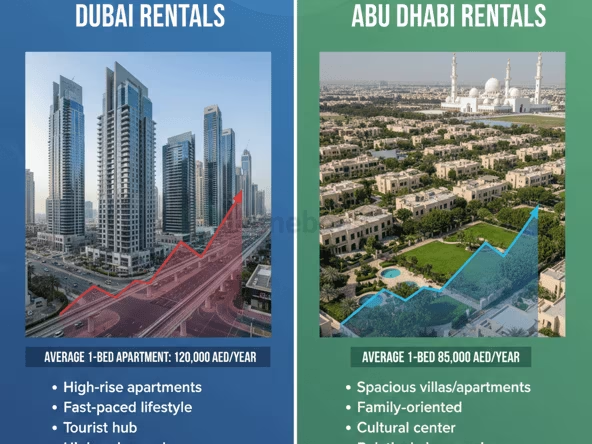
When you first arrive in Dubai, everything feels larger than life. The city never really slows down—glass towers, busy roads, and people from all over the world crossing paths.
It’s exciting, of course, but once the first rush of adrenaline fades, reality sets in: you need a place to live. And that’s when the search for an apartment, and more importantly, the paperwork that comes with it, begins.
Here’s the thing. A before Dubai rental contract after is not something you skim through in five minutes. Many people do, and later they’re left fighting over deposits, dealing with surprise charges, or realizing their “great deal” wasn’t so great after all.
That’s why I put together this before tenancy contract Dubai checklist after. It’s not meant to scare you—it’s simply a guide to keep you from stepping into the same traps others have.
Whether you’re about to sign your very first rent agreement Dubai or renewing a lease, following a tenancy contract Dubai checklist keeps you safe and gives peace of mind when reviewing any Dubai rental contract.
Why You Need a Checklist Before Signing in Dubai?
Plenty of newcomers make the same mistake: they find a place, skim the contract, sign a rent agreement Dubai, and only later discover extra charges they didn’t expect. This is why a Dubai rental contract should never be rushed.
Maybe it’s a surprise maintenance fee, maybe the chiller isn’t included, or maybe the landlord refuses to return the deposit. All of this usually hides in the fine print.
Dubai has a strong rental system, with RERA and the Rental Disputes Centre ready to step in if things go wrong.
But the law only works in your favor when the contract is written properly. If something important is missing, you’ll have a hard time proving it later. This is why verbal promises mean little here.
A landlord might assure you that parking or free internet is part of the deal, but if it’s not on paper, it doesn’t exist. Having a before tenancy contract Dubai checklist after forces you to slow down, check every detail, and make sure your rights are actually protected before you hand over a single dirham.
Verify the Landlord and Property Ownership
Before you hand over money or sign a lease, check that the landlord really owns the property. Ask to see the Title Deed and their Emirates ID. The two should match. If they don’t, walk away.
Dubai makes it fairly simple to confirm ownership. Through the Dubai Land Department (DLD) or the Dubai REST app, you can enter the deed number and see if the property is valid and who the registered owner is. This step is quick, and it gives you peace of mind.
Also, check the broker’s details. Real agents in Dubai must be registered with RERA, the Real Estate Regulatory Agency. A RERA number should appear on listings and ID cards. If a broker avoids questions or refuses to show proof, treat that as a warning sign.
Fake landlords and unlicensed brokers are still out there. Some pressure you to pay cash quickly, while others dodge paperwork. Don’t rush. Doing proper Dubai rental contract verification can save you from losing both money and time.

Review the Tenancy Contract Details Carefully
When you sit down with the contract, don’t treat it like just another form to sign. Use a tenancy contract Dubai checklist to stay organized. Slow down. Read every clause. Ask questions.
Rental Amount & Payment Terms
Make sure the rent amount is spelled out clearly: how much, when, how often (monthly? yearly?).
Ask how many cheques they expect. In Dubai, people often pay rent in multiple cheques. Know exactly when each cheque is due.
Find out what happens if you pay late. Some contracts charge interest or late fees. You want those written down.
Check whether rent includes extra costs (e.g. maintenance, chiller, other service charges) or if those are billed separately.
Security Deposit
Usually, the deposit is one month’s rent or more, depending on whether the property is furnished. Source: Provident Estate says one month’s rent is standard.
Be clear about why and how much of the deposit may be withheld — e.g., for damage beyond normal wear and tear, unpaid bills, etc.
Ask when the deposit will be returned at the end ofthe tenancy. Many landlords return it within 14-30 days.
Contract Length
Standard duration in Dubai is 1 year. Some landlords offer longer or shorter.
Make sure start and end dates are written. If you renew, the renewal terms (rent increase etc.) should be in the contract or clearly stated.
Importance of Everything Being in Writing
If something is promised verbally — like maintenance, furniture, parking — get it into the contract.
Don’t rely on oral agreements. If it’s not written, it’s hard to enforce later.
A rent agreement in Dubai should clearly state the rental amount, deposit, and contract length to avoid conflicts.
Clarify What’s Included in the Rent
Always ask what comes with the rent. You might assume things are “included,” but that’s not always true in Dubai.
Utilities (DEWA, water, electricity): Most places charge these separately. If the listing says “utilities included,” check which ones. Sometimes water is in, but electricity and cooling (chiller charges) are not.
Wi-Fi / Internet / TV: These are often extra. The landlord may not pay for them.
Parking: Note that some buildings offer free parking. Others charge a monthly fee.
Maintenance or service costs: Buildings often have costs for cleaning, maintenance of common areas, gardens, swimming pool, etc., that you need to pay attention to. These may be passed on to tenants unless stated otherwise.
Chiller / Cooling Charges: If it’s not “chiller-free,” you might pay a separate chilling bill. If it is “chiller-free,” the landlord covers the cooling costs.

Inspect the Property Before Signing
Don’t just walk through the flat once and assume everything works. Bring a checklist and link it to your rent agreement Dubai. Inspect well.
Appliances: Turn on the fridge, oven, cooker, washer, etc. Look for weird noises, bad smells, broken buttons. If something doesn’t work now, you’ll be stuck fixing or replacing it later.
AC functionality: Dubai heat is no joke. Test the AC in all rooms. Is it cooling properly? Are you hearing any leaks or strange noises?
Water pressure or heating appliances: Turn on the faucets or take a shower, check the hot and cold water. Is the water pressure good? Any drainage issues or slow flow?
Pest control: Look for bugs or pests—around kitchens, behind appliances, windows, corners. Even small signs matter.
Building amenities (gym, pool, parking access): If they’re promised, test them or see them operating. Parking should be easy and accessible; gym should not be neglected; pool should be clean.
Take photos/videos as proof before moving in: Walk through with your phone. Snap the damaged spots, scratches, stains. Date these. This protects your deposit later.
Using a move-in checklist like this helps you see what really works, and what needs fixing before you sign.
Make sure all this is written in the contract. Verbal promises fade; written ones protect you. It is important to be transparent about the terms of your Dubai rental agreement, as it helps to avoid unexpected costs and subsequent stress.
Check the Renewal and Termination Clauses
When your lease is ending, renewal and exit rules matter a lot. Checking them against a tenancy contract Dubai checklist can save you from penalties or unexpected costs if you don’t read them carefully.
Renewal Terms under RERA Law
Law No. 26 of 2007 (amended by Law No. 33 of 2008) says that if either landlord or tenant wants to change contract terms or rent for the next lease period, they must give notice at least 90 days before the current contract ends.
This rule gives landlords a chance to review the market and decide if they want to raise the rent. It also gives tenants enough time to plan their next move.
Notice Period
If the landlord forgets to send that notice on time? Then the old terms stand—rent stays the same—unless you agree to something different.
Penalties for Early Exit
If you break the lease before it ends, many contracts impose penalties. Usually one or two months’ rent or whatever is agreed in the contract.
Always look for an early termination clause. If there isn’t one, you’ll need to negotiate or face whatever is written.
Subletting Rules
Law requires the landlord’s written approval if you want to sublet or assign your lease. Without it, you risk eviction.
Even if subletting is allowed, sub-tenants usually don’t get official registration (e.g. Ejari) unless the contract is updated properly.
Understand Ejari Registration
Ejari simply means “my rent” in Arabic. In Dubai, it’s the government’s way of recording every rent agreement Dubai. RERA, the real estate authority, runs the system so each lease is logged and official.
Why Ejari Matters
If your contract isn’t registered, it’s almost like it doesn’t exist. You can run into problems setting up DEWA, proving your address, or sorting out disputes with a landlord.
That can block you from setting up DEWA utilities, renewing a visa, or even defending yourself if a dispute with your landlord goes to court.
How to Register with Ejari
You need a signed tenancy contract with all details filled in: rent, period, landlord & tenant info.
Collect documents: your Emirates ID, passport & visa copy, landlord’s ID, title deed of the property, and sometimes a recent DEWA / “green bill.”
Use one of the official channels: the Dubai REST app, the Ejari portal via Dubai Land Department, or a trustee/typing centre.
Pay the required fee. After processing, you’ll get the Ejari certificate.
Legal Protection Benefits
Your lease becomes legally binding. Both you and the landlord must follow what’s written. It stops landlords from making unfair rent hikes or evictions not aligned with the law. Ejari is often needed for visas, utility connections, and other services.
Know Your Rights Under Dubai Rental Laws
When you rent in Dubai, you have legal protections. Knowing them keeps you from getting taken advantage of.
Use the RERA Rental Calculator
Before you accept any rent offer or renewal, plug the numbers into the official RERA calculator. It tells you if the proposed rent increase is allowed under the law.
This stops landlords from overcharging you. You’ll see what the market rate is for your area.
Eviction Rules
If your landlord wants to evict you (for reasons like personal use, sale, or demolition), they must give you 12 months’ notice. That gives time to plan and find somewhere else.
Notice must be given properly — via registered post or notary, not just verbally or through informal messages.
Landlord’s Obligations
The landlord must maintain the property. Major repairs (structure, plumbing, electrical safety) are their job.
Utility systems and living standards must be kept in working order.
Tenant’s Obligations
You have to pay rent on time. Late payment clauses are enforceable. You should care for the property. Don’t damage things. Avoid neglect.
Red Flags to Watch For in a Dubai Rental Contract
| Red Flag | What to Look For / Why It’s Bad | What You Should Do |
| Verbal promises not documented | If a landlord says “I’ll fix the AC next week” or “free gym access included” but nothing is in the contract, you can’t enforce those promises. | Ask that every promise is written into the tenancy contract. Get clarifications in writing (email/WhatsApp) and include them as clauses. |
| Incomplete documents or unsigned pages | Pages missing signatures, blank fields (rent, landlord name, address), or missing annexures (title deed, landlord ID) mean ambiguity and possible disputes. | Before you sign, check every page is filled in and signed. If anything is blank or not final, ask for a corrected version. Don’t pay anything until contract is complete. |
| Cash-only deals without receipts | Paying in cash or insisting on cash only often leaves no proof. Without receipts, you have no proof of payment or date. | Use bank transfers, cheques, or other traceable methods. If you pay cash, get a signed receipt. Always document payment. |
| Unregistered brokers | A broker not registered with RERA or not having a RERA license may be unreliable, misinformed, or worse—part of a scam. | Ask the broker for their RERA ID. Check with official lists or apps to confirm they are registered. Prefer working with licensed agents. |
Conclusion
Renting in Dubai doesn’t have to be complicated. If you slow down and follow a checklist, you avoid the traps that catch so many tenants. Homebook makes the process easier with verified listings and contracts you can trust.
Start your Dubai rental journey the smart way with Homebook today. Whether signing a new rent agreement Dubai or renewing your tenancy contract, this checklist ensures peace of mind.